

Most people do not need more food guilt. They need a better system. Meals have to support heart health, metabolic health, strength, and energy — but they also have to work on ordinary days. Days with jobs. Days with kids. Days with low appetite or a lot of cravings. Longevity nutrition fails when it depends on culinary purity or constant restriction. It works when it is built around a structure simple enough to survive real life.
The kitchen decides more than the diet does
The single biggest factor in eating well over time is not willpower. It is what is already in the kitchen. People eat what is available. They do not eat what is not. A longevity pantry does not need to be expensive or exotic — it needs to be stocked with a core set of foods flexible enough to become real meals, repeatedly.
A working pantry generally includes:
- Proteins & legumes: dried and canned lentils, chickpeas, and beans; canned sardines or mackerel in olive oil; eggs; Greek yogurt; boneless skinless chicken thighs; salmon or white fish; firm tofu or tempeh.
- Grains & starches: rolled oats, brown rice, farro, whole grain pasta, quinoa, sweet potatoes.
- Pantry staples: extra-virgin olive oil — arguably the single most important item in the kitchen — canned tomatoes, low-sodium broth, vinegar, Dijon mustard, tahini.
- The spice cabinet: turmeric and black pepper together (the pepper meaningfully improves absorption of turmeric’s curcumin), cumin, smoked paprika, cinnamon, garlic powder, za’atar.
- Freezer: frozen edamame, mixed vegetables, fish fillets, and berries — the freezer is not a downgrade from fresh, it is insurance against the week going sideways.
The habit that matters more than any recipe: shopping
A well-stocked kitchen does not happen by accident. One simple structure removes most of the weekly decision fatigue: the 3-Breakfast, 3-Lunch, 3-Dinner Rule.
Choose one hot breakfast, one cold or prep-ahead breakfast, and one grab-and-go breakfast. For lunch: one meal-prep lunch, one no-cook lunch, one leftovers lunch. For dinner: one fish or seafood night, one chicken or turkey night, one bean- or lentil-based night. That is nine total meal patterns to rotate through a week — enough variety to avoid boredom, few enough to actually plan for.
Shop by category rather than by individual recipe: proteins (three to four sources), vegetables by role (leafy greens, roasting vegetables, fresh additions), fruit, grains, legumes, flavor builders, and at least one emergency meal for the night nothing goes as planned.
The Five-Element Plate
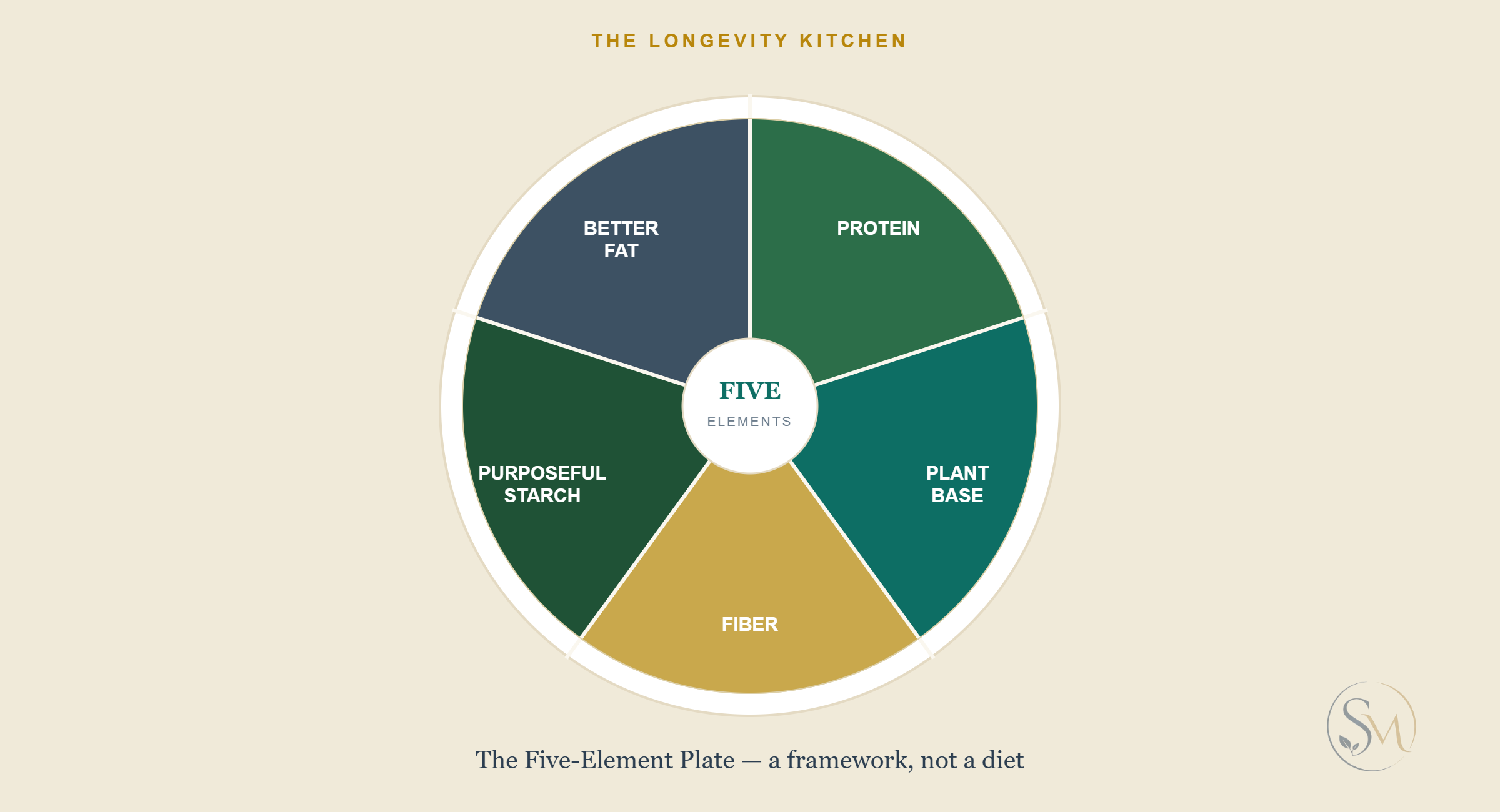
Once the kitchen is stocked, the remaining question is simple: how do you actually build a meal? A strong plate reliably has five structural elements:
- A protein anchor — eggs, fish, legumes, poultry.
- A plant base — greens, roasted vegetables, raw vegetables.
- A fiber source — beans, lentils, whole grains.
- A purposeful starch — sweet potato, brown rice, whole grain pasta, farro.
- A better fat — olive oil, avocado, nuts, fatty fish.
The same logic scales down into a bowl: choose a base grain or green, add a protein, add two or three vegetables — one roasted, one fresh — finish with a sauce built from olive oil, acid, and a flavor agent, then add texture with nuts, seeds, or something pickled.
And it scales up into a day: aim for protein at each main meal, include plants several times, get fiber more than once, keep most drinks simple, and make sure at least one meal each day clearly looks like real food.
Why this works better than a diet plan
None of this requires eliminating a favorite meal or hitting a perfect macro target. The goal of a longevity kitchen is not eating perfectly — it is building a kitchen that helps the body stay strong, clear, and well-nourished over time, while still leaving room for appetite, culture, and daily life. A framework you can repeat on a Tuesday is worth more than a diet you can only follow for a week.
Adapted from The Longevity Kitchen, Book Two in the Jawani Longevity Series by Charan Shikh, MD.
From the ShikhMD Library
Continue in Built to Last: The Longevity Blueprint
Explore the bookMedical disclaimer: This article provides general educational information and is not a substitute for individualized medical diagnosis or treatment.