

Most people believe they are metabolically healthy simply because no one has told them otherwise. A normal annual physical, a diabetes diagnosis that never came — these feel like reassurance. But metabolic decline rarely announces itself. It builds quietly for years, in a system that shapes almost everything else in the body, long before a standard lab report ever flags a problem.
The system nobody talks about until it’s too late
People tend to think of metabolic health mainly in terms of diabetes, body weight, or blood sugar numbers. But metabolism is far broader than that. It influences energy regulation, fat storage, vascular burden, inflammation, appetite, sleep quality, muscle preservation, and how well the body handles fuel across decades of living.
Metabolic decline rarely begins dramatically. It often begins as a quieter shift: more abdominal weight, stronger cravings, less stable energy, worse sleep, and a body that no longer handles the same meals the same way. By the time glucose becomes abnormal, the system has often been compensating for years. Longevity medicine is interested in that compensation phase — while reversal is still easier.
Poor metabolic health does not stay confined to one system. It amplifies burden everywhere at once: inflammation becomes easier to sustain, visceral fat increases, blood pressure worsens, sleep apnea becomes more likely, vascular risk rises, and mood and cognitive resilience under stress narrow. Fix the metabolic environment, and almost every other system in the body benefits.
The silent insulin resistance cascade
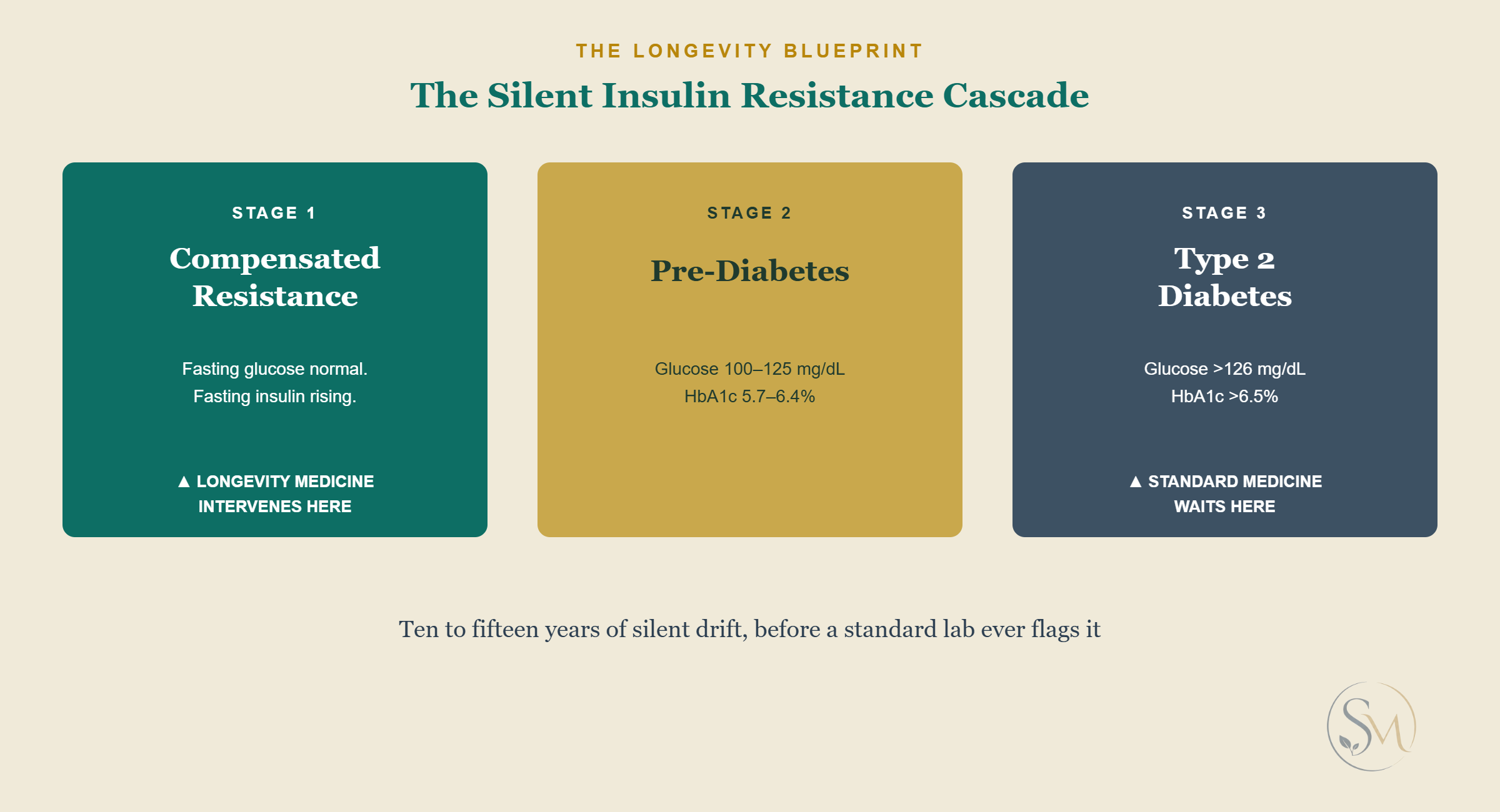
The most important concept in metabolic aging is insulin resistance — the gradual loss of the body’s ability to handle glucose and energy storage efficiently. The critical point: insulin resistance can drive significant damage for a decade or more before blood glucose rises enough to trigger a standard pre-diabetes flag.
- Stage 1 — Compensated Resistance. Fasting glucose is still normal, but fasting insulin is rising as the body works harder to maintain control. Standard medicine orders nothing here. This is exactly where longevity medicine intervenes.
- Stage 2 — Pre-Diabetes. Glucose reaches 100–125 mg/dL, HbA1c climbs to 5.7–6.4%, and significant insulin resistance is already present. This is typically the first point standard screening notices anything at all.
- Stage 3 — Type 2 Diabetes. Glucose exceeds 126 mg/dL, HbA1c passes 6.5%, and organ damage may already be underway. Diagnosis and treatment begin here — often ten to fifteen years after the silent damage started.
Early insulin resistance stays hidden because the pancreas simply releases more insulin to keep glucose in range. That compensation is useful for a time, but it isn’t free — persistently elevated insulin promotes fat storage, makes weight loss harder, and often travels with rising triglycerides, central adiposity, and blood pressure.
The targets that matter
Fasting insulin is one of the most important — and most routinely neglected — blood tests in medicine. A fasting insulin above 5 mIU/L signals early metabolic drift, yet most lab “normal” ranges extend to 25 mIU/L or beyond, calibrated to the average sick population rather than optimal biology.
- Fasting insulin: under 5 mIU/L (standard range allows up to 25)
- Fasting glucose: 70–90 mg/dL (standard range allows up to 100)
- HbA1c: under 5.4% (standard range allows up to 5.7%)
- Triglycerides: under 100 mg/dL (standard range allows up to 150)
- HDL cholesterol: above 60 mg/dL, most effectively raised by Zone 2 exercise
- ApoB: under 80 mg/dL — a better predictor of vascular risk than LDL alone
A single value can be swayed by recent sleep, illness, stress, or hydration. What matters more is whether several markers are moving in the same direction over time — the goal isn’t to chase one perfect number, but to reduce how hard the body has to compensate every day.
Why this matters
Metabolic health determines whether the body ages inside a clean, resilient environment or a burdened, inflammatory one — and it shapes nearly every other system this practice cares about. The good news is that the earlier the pattern is caught, the more reversible it tends to be: nutrition, regular movement, resistance training, better sleep, and modest weight reduction can restore insulin sensitivity long before it becomes a diagnosis.
Adapted from Built to Last: The Longevity Blueprint by Charan Shikh, MD.
From the ShikhMD Library
Continue in Built to Last: The Longevity Blueprint
Explore the bookMedical disclaimer: This article provides general educational information and is not a substitute for individualized medical diagnosis or treatment.