

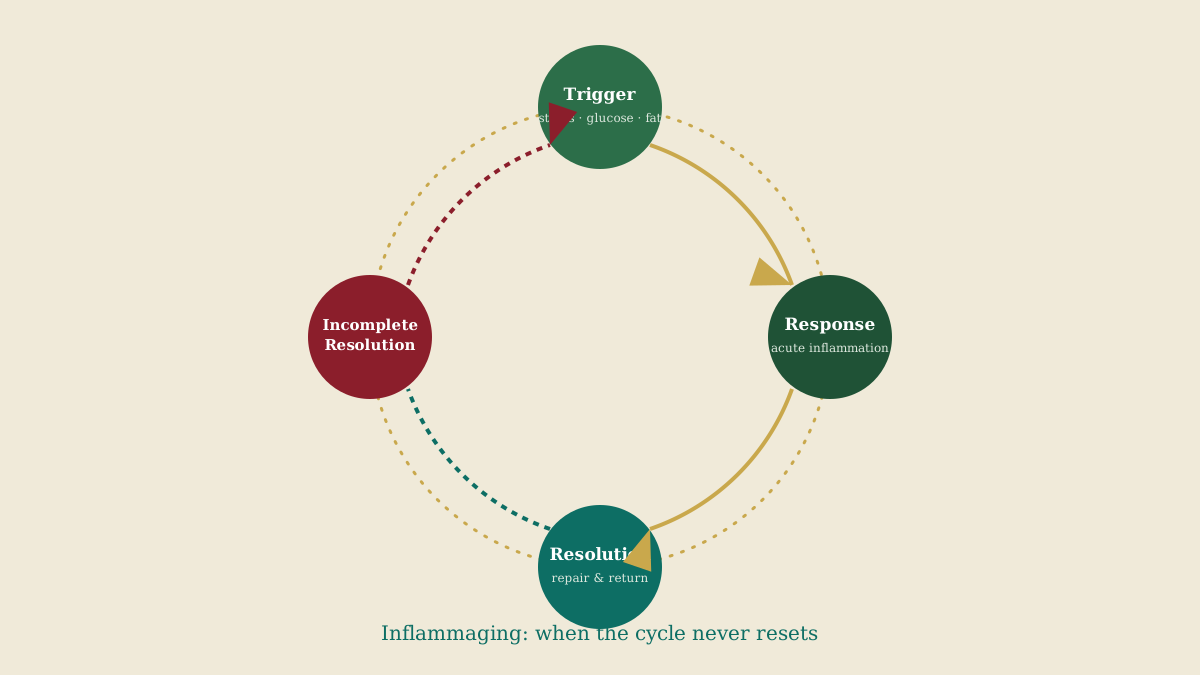
The problem is not only the hit. It is the incomplete reset after the hit. Inflammation gets blamed for fatigue, weight gain, joint pain, mood changes, cancer, and heart disease — and gets attached to a seemingly endless range of products that promise to “fight” it. Some of that attention is scientifically grounded. Much of it is vague and commercially driven. The better question isn’t whether you have inflammation — everyone does — it’s what’s keeping your inflammatory system turned on when it should be returning to baseline.
Inflammaging: the slow burn of biological aging
The scientific term for the low-grade, chronic inflammation characteristic of aging is inflammaging — a portmanteau coined because the relationship between the two is so consistent and so clinically significant. It isn’t a single event. It’s the result of overlapping inputs accumulating over time: signals from senescent cells, from visceral fat, from insulin-resistant metabolism, from poor sleep, from a gut microbiome under stress, from chronic psychological pressure.
These inputs combine and reinforce each other. The result is a body that’s harder to calm, slower to restore, and more vulnerable to the very conditions — cardiovascular disease, metabolic disease, dementia, cancer — that shorten and narrow life.
The body that stayed slightly aggravated
A woman in her mid-fifties described her experience accurately, even without the biological vocabulary for it. She said her body always felt slightly aggravated — not in pain, not dramatically unwell, just aggravated. Sleep was lighter than it used to be. Joints were stiffer in the morning. Weight had shifted centrally despite no major change in eating. Recovery from a hard week was slower than it used to be.
Her experience wasn’t explained by one diagnosis. It was better understood as a body living inside a more burdened internal environment. When her inflammatory load was reduced — through sleep improvement, reducing visceral fat, and addressing subclinical sleep apnea — she described feeling less aggravated within weeks.
Resolution is the missing half of inflammation
A healthy inflammatory response has a beginning, a purpose, and an end: the body identifies a threat, mobilizes a response, repairs the damage, and returns toward baseline. Problems arise when that final step is incomplete — the signal stays active, recovery stays unfinished, and ordinary stressors start stacking on top of one another.
This is why the most effective anti-inflammatory strategy is rarely one dramatic intervention. It’s the steady removal of the inputs that prevent resolution: poor sleep, excess visceral fat, smoking, inactivity, metabolic instability, unrelenting psychological stress.
The most powerful clinical levers
- Zone 2 exercise, 150+ minutes weekly — direct anti-inflammatory effect via myokine release, and clears senescent cells. The most replicated finding in exercise physiology.
- Reducing visceral body fat — visceral fat is metabolically active inflammatory tissue; removing it lowers baseline inflammation directly.
- Sleeping 7–9 hours consistently — sleep deprivation measurably raises IL-6, CRP, and cortisol.
- The Mediterranean nutritional pattern — polyphenols from olive oil and berries, omega-3s, and fiber directly modulate the NF-κB inflammatory pathway.
- Smoking cessation — removes the primary driver of systemic oxidative stress.
- Tracking hs-CRP — a clinical feedback tool; the optimal target is under 1.0 mg/L.
Why this matters
Improvement is rarely announced by one dramatic result. It usually appears as a pattern: sleep becomes more restorative, morning stiffness eases, energy steadies, recovery after exercise improves, and the body feels less reactive after an ordinary stressful week. Request hs-CRP at your next blood draw, identify your single biggest inflammatory driver — poor sleep, visceral fat, low movement, or chronic stress — and address that one first.
Adapted from Built to Last: The Longevity Blueprint by Charan Shikh, MD.
From the ShikhMD Library
Continue in Built to Last: The Longevity Blueprint
Explore the bookMedical disclaimer: This article provides general educational information and is not a substitute for individualized medical diagnosis or treatment.