

Most adults over 40 are quietly losing muscle every year — and most of them are eating too little protein to stop it. Sarcopenia, the age-related loss of muscle mass and strength, doesn’t announce itself with a diagnosis. It shows up later as a harder time standing from a chair, a slower walking pace, a fall that shouldn’t have caused a fracture. The single most correctable input behind it is protein intake, and the standard recommended daily allowance was never designed to prevent it.
The RDA was built for a different question
The current protein RDA (0.8g per kilogram of body weight) was established to prevent deficiency in young, sedentary adults — not to preserve muscle mass through the fourth, fifth, and sixth decades of life. Research on aging muscle consistently points to a higher target, generally 1.2 to 1.6g per kilogram, to overcome a phenomenon called anabolic resistance: aging muscle simply requires more protein per meal to trigger the same amount of muscle protein synthesis that a smaller amount produced at 25.
Eating the RDA amount isn’t wrong — it’s just insufficient for the specific job of preserving muscle against the grain of normal aging.
The retired accountant who thought he ate enough
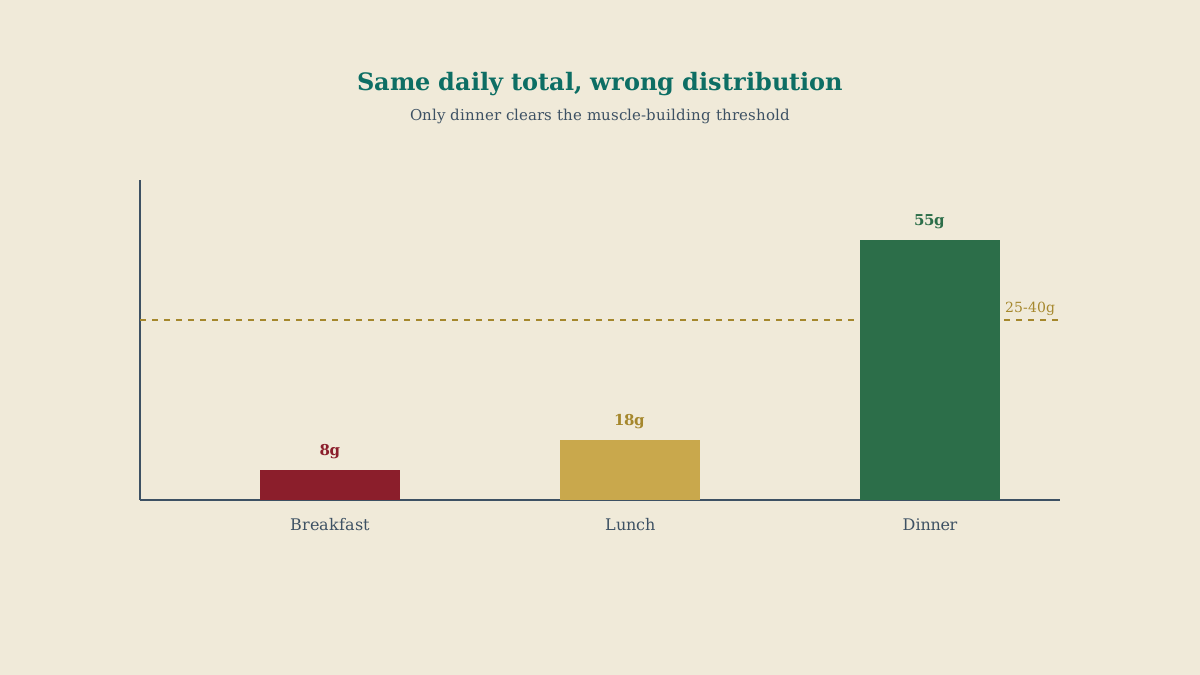
A man in his early sixties considered himself a healthy eater — vegetables at most meals, modest portions, rarely fast food. A body composition scan told a more complicated story: his muscle mass had declined more than expected for his fitness level, and a diet review revealed why. His protein was concentrated almost entirely at dinner — a small amount at breakfast, almost none at lunch, a large portion at night. Total daily protein looked adequate on paper, but distributed this way, most meals never crossed the threshold needed to meaningfully stimulate muscle protein synthesis.
Spreading roughly the same total protein across three meals, with a meaningful amount at breakfast specifically, changed his trajectory measurably within six months of consistent strength training paired with the adjusted intake.
What actually works
- 25-40g of protein per meal — the threshold most research points to for meaningfully stimulating muscle protein synthesis in an aging body, roughly three times a day.
- Front-load breakfast — the meal most people under-eat protein at, and the one that sets the tone for the rest of the day’s intake.
- Pair with resistance training — protein without a mechanical stimulus builds far less muscle; the two are multiplicative, not additive.
- Leucine-rich sources — eggs, dairy, poultry, fish, and soy are particularly efficient at triggering the synthesis response per gram.
- Don’t fear it near bedtime — a modest protein-containing snack before sleep supports overnight muscle repair rather than working against it.
Why this matters
Muscle is not just about strength or appearance. It’s metabolically active tissue that influences blood sugar regulation, and it’s the physical reserve that determines whether a fall becomes an inconvenience or a hospitalization. Look at your own protein distribution across a typical day — most people find one meal, usually breakfast, is carrying almost none of the load.
Adapted from Built to Last: The Longevity Blueprint by Charan Shikh, MD.
From the ShikhMD Library
Continue in Built to Last: The Longevity Blueprint
Explore the bookMedical disclaimer: This article provides general educational information and is not a substitute for individualized medical diagnosis or treatment.