

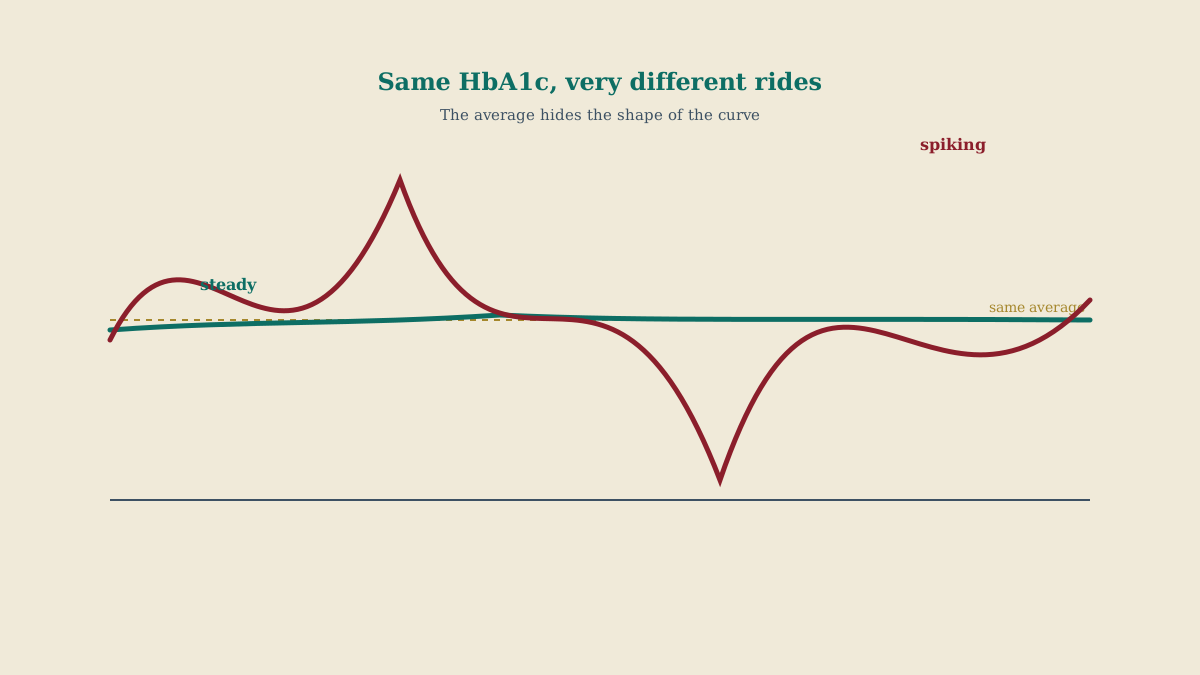
Two people can have identical HbA1c results and completely different metabolic health, because that single average number hides the shape of the ride. HbA1c measures average blood glucose over roughly three months — but it can’t distinguish between someone whose glucose stays steady all day and someone whose glucose spikes sharply after every meal and crashes in between, even if the average works out the same. That distinction, called glycemic variability, is increasingly recognized as its own independent risk factor.
The problem with averages
Large glucose swings — sharp post-meal spikes followed by steep drops — generate oxidative stress and vascular inflammation independent of the average glucose level itself. Two patients with an HbA1c of 5.4% can have very different underlying pictures: one with gentle, controlled fluctuations, another riding a rollercoaster of spikes and crashes that a quarterly average simply cannot capture. It’s the difference between a calm lake and a lake with the same average depth but violent, repeated waves.
The wake-up call from a continuous glucose monitor
A man in his mid-forties with normal fasting glucose and a completely unremarkable HbA1c wore a continuous glucose monitor for two weeks out of curiosity, expecting to confirm what his labs already suggested. Instead, he found dramatic spikes after his typical breakfast — a bagel and orange juice — followed by crashes that left him reaching for a mid-morning snack he’d never connected to what he’d eaten two hours earlier.
Swapping that specific breakfast for one built around protein and fiber flattened the curve almost immediately, and the mid-morning energy crash he’d assumed was just “how mornings feel” disappeared within days.
What actually smooths the curve
- Protein and fiber before carbohydrate — eating vegetables or protein first at a meal measurably blunts the glucose spike from the carbohydrates that follow.
- A short walk after eating — even ten minutes of walking after a meal meaningfully reduces the post-meal glucose spike.
- Consistent meal timing — irregular eating patterns are associated with greater glycemic variability than regular ones, independent of what’s actually eaten.
- Sleep quality — a single night of poor sleep measurably worsens next-day glucose control, another example of sleep’s outsized metabolic influence.
- A continuous glucose monitor, even briefly — a two-to-four-week trial, increasingly available without a prescription, can reveal individual food responses that a standard panel never would.
Why this matters
A normal HbA1c is reassuring but incomplete. If energy crashes, afternoon fog, or unexplained hunger a few hours after eating sound familiar, the shape of the glucose curve — not just its average — may be the missing piece. A short trial with a continuous glucose monitor is one of the most personally revealing, low-risk experiments available in modern preventive medicine.
Adapted from Built to Last: The Longevity Blueprint by Charan Shikh, MD.
From the ShikhMD Library
Continue in Built to Last: The Longevity Blueprint
Explore the bookMedical disclaimer: This article provides general educational information and is not a substitute for individualized medical diagnosis or treatment.