

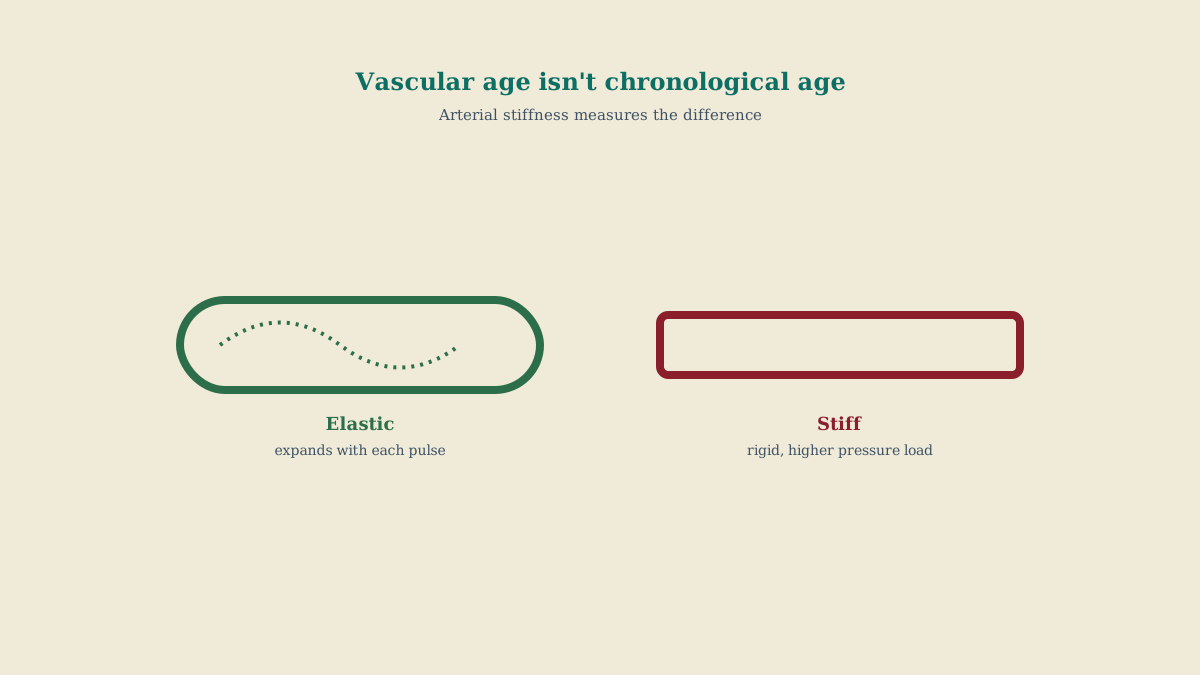
Two people can have identical chronological ages and dramatically different vascular ages, and the difference often comes down to how stiff their arteries have become. Healthy arteries are elastic — they expand and recoil with every heartbeat, cushioning the pressure wave from the heart. Over years of exposure to high blood pressure, glucose, and inflammation, that elasticity is gradually lost, and the resulting stiffness is one of the most direct physical measures of vascular aging available.
Why stiffness matters more than a single blood pressure reading
A single blood pressure reading is a snapshot; arterial stiffness measures the underlying structural change that makes hypertension progressively harder to control over time. Stiff arteries force the heart to work harder against unyielding vessel walls, raise systolic pressure disproportionately, and reduce the blood flow cushioning that protects small vessels in the brain and kidneys. It’s frequently the mechanism connecting long-standing hypertension to the strokes and cognitive decline that follow years later.
The measurement that reframed one patient’s risk
A woman in her early sixties had blood pressure that ran in the acceptable range on most visits, giving her and her previous physician reasonable confidence that her cardiovascular risk was well-controlled. A pulse wave velocity measurement — a non-invasive test estimating arterial stiffness — told a different story: her vascular age was measurably older than her chronological age, explaining a family history of early cardiovascular events that her blood pressure numbers alone hadn’t accounted for.
That result shifted her treatment target from “acceptable blood pressure” to a more aggressive one, alongside the same lifestyle interventions proven to improve arterial elasticity directly.
What actually improves arterial elasticity
- Aerobic exercise, consistently — regular Zone 2 cardio is one of the most well-established ways to improve arterial elasticity, independent of its effects on weight or blood pressure alone.
- Reducing sodium intake — excess dietary sodium contributes directly to arterial stiffening over time, beyond its well-known effect on blood pressure.
- The Mediterranean nutritional pattern — polyphenols and omega-3 fatty acids are associated with measurably improved vascular elasticity in multiple trials.
- Treating sleep apnea — the repeated oxygen drops of untreated sleep apnea accelerate arterial stiffening, another thread connecting sleep to cardiovascular aging.
- Not smoking — smoking is one of the single most damaging inputs to arterial elasticity, with measurable improvement beginning within weeks of cessation.
Why this matters
Pulse wave velocity testing is increasingly available through cardiology practices and some longevity-focused clinics, and it adds a dimension a standard blood pressure cuff cannot capture. If cardiovascular disease runs in your family despite reasonable blood pressure numbers, ask whether arterial stiffness testing is appropriate — it may explain a risk that the numbers alone are missing.
Adapted from Built to Last: The Longevity Blueprint by Charan Shikh, MD.
From the ShikhMD Library
Continue in Built to Last: The Longevity Blueprint
Explore the bookMedical disclaimer: This article provides general educational information and is not a substitute for individualized medical diagnosis or treatment.