

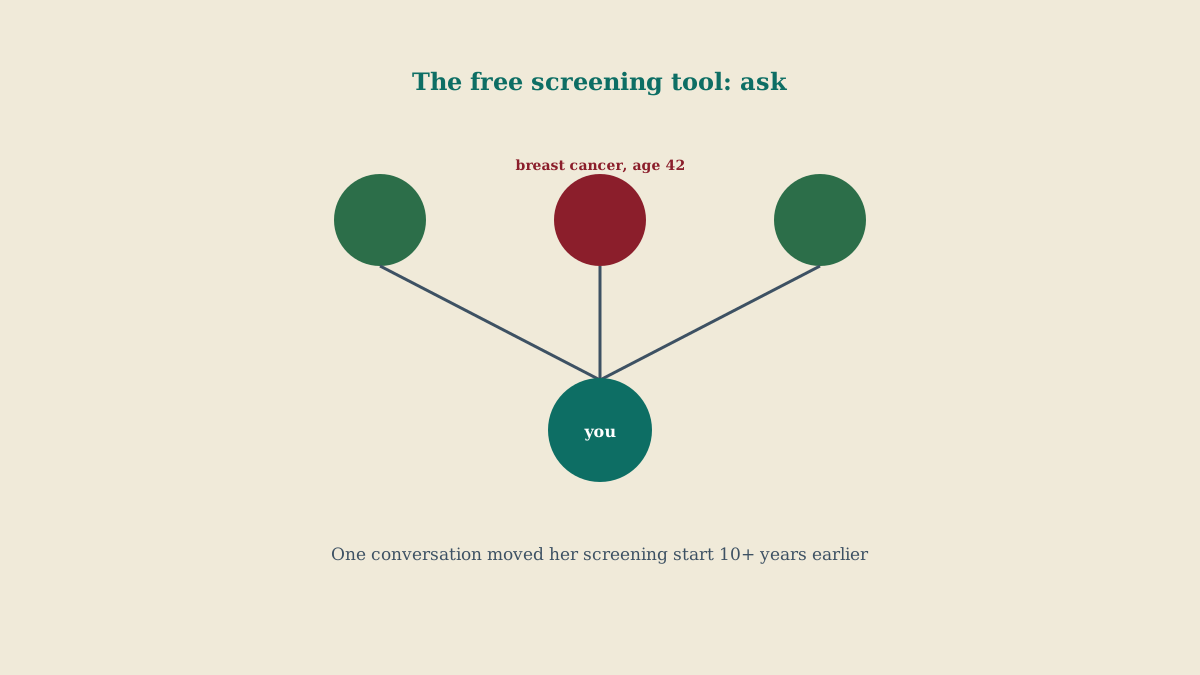
The single most underused risk-assessment tool in preventive medicine costs nothing, requires no appointment, and most people have never filled it out completely. A detailed family health history — not just “heart disease runs in the family,” but which relatives, at what age, with what specific diagnosis — remains one of the most powerful predictors of individual risk available, and it directly changes when screening should reasonably begin.
Why the details matter more than the general impression
A vague sense that “cancer runs in the family” carries far less clinical value than knowing a mother was diagnosed with colon cancer at 45, or a father had a heart attack at 50. Specific diagnoses, specific ages of onset, and how closely related the affected family member is all meaningfully change individual risk calculations and, in many cases, directly move up the recommended age to begin screening for a given condition — sometimes by a decade or more.
The daughter who asked the right questions
A woman in her mid-thirties had never given much thought to her family’s medical history beyond a general awareness that her grandmother had “some kind of cancer.” A direct conversation with her mother uncovered a more specific and more relevant picture: her grandmother’s breast cancer diagnosis at 42, and an aunt’s diagnosis at 47 — a pattern of early onset that, once documented, changed her own recommended starting age for breast cancer screening by more than a decade earlier than standard guidelines would have suggested.
None of this required genetic testing or an advanced imaging panel. It required one conversation and a willingness to ask for specifics instead of accepting a vague family impression.
What to actually document
- First-degree relatives first — parents and siblings carry the most weight in risk calculations, followed by grandparents, aunts, and uncles.
- Specific diagnosis and age at diagnosis — “cancer” isn’t enough; the type and the age it appeared both matter for risk stratification.
- Cardiovascular events specifically — a parent or sibling with a heart attack or stroke before age 55 (men) or 65 (women) is considered a significant, independent risk factor.
- Update it periodically — family history isn’t static; a new diagnosis in a relative can meaningfully change your own risk picture and should be brought to your next visit.
- Bring it to your physician directly — a documented family history should actively shape when screening starts, not sit unused in an intake form.
Why this matters
Standard screening guidelines are built for average risk. A detailed family history is what tells a physician whether “average” actually applies to a given patient, or whether screening should start earlier. Have the conversation with older relatives while the details are still available to ask about — it’s one of the few risk factors that costs nothing to document and can meaningfully change a screening timeline.
Adapted from Built to Last: The Longevity Blueprint by Charan Shikh, MD.
From the ShikhMD Library
Continue in Built to Last: The Longevity Blueprint
Explore the bookMedical disclaimer: This article provides general educational information and is not a substitute for individualized medical diagnosis or treatment.