

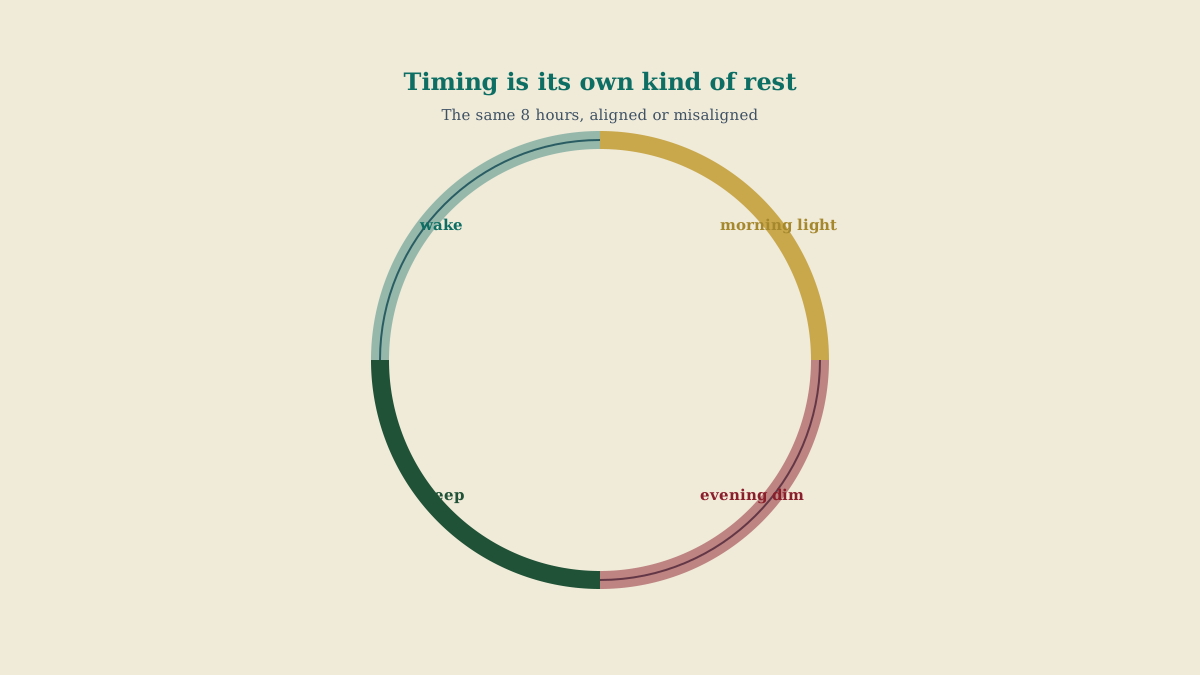
Two people can sleep the same eight hours and wake up with very different biology, depending on when those eight hours happened. The body runs on an internal circadian clock, synchronized primarily by light exposure, that governs far more than sleepiness — it times hormone release, body temperature, digestion, and cellular repair. Sleep that fights against that internal clock is measurably less restorative than sleep aligned with it, even at the same total duration.
Light is the primary signal, and modern life scrambles it
The circadian clock is set largely by light hitting the eyes — bright morning light signals “day” and suppresses melatonin, while darkness signals “night” and allows it to rise. Modern life inverts this constantly: dim indoor lighting all day weakens the morning signal, while bright screens late at night delay the evening one. The result is a circadian rhythm that’s technically present but poorly synchronized, producing sleep that’s harder to fall into, lighter, and less restorative than a well-aligned rhythm would be.
The night-shift nurse who found her reset
A woman in her late thirties worked rotating night shifts for over a decade and had come to accept fatigue, brain fog, and metabolic weight gain as simply the cost of the job. When her schedule shifted to a more stable pattern, she was surprised by how much changed beyond just feeling less tired — her blood pressure improved, her weight stabilized without any deliberate diet change, and a persistent low mood she’d carried for years noticeably lifted.
Her experience reflects a well-documented pattern: circadian misalignment carries measurable metabolic and cardiovascular costs independent of total sleep duration, which is why shift work is associated with elevated long-term health risks even among people who technically get enough hours.
What actually realigns the clock
- Morning sunlight within an hour of waking — ten to twenty minutes of outdoor light exposure is one of the most powerful, cost-free circadian anchors available.
- Consistent wake time, even on weekends — the wake time anchors the clock more powerfully than bedtime does; a shifting wake schedule is a common, underappreciated driver of poor sleep.
- Dim light in the two hours before bed — bright light, especially blue-spectrum light from screens, delays the melatonin rise that initiates sleep.
- Consistent meal timing — the digestive system has its own circadian rhythm, and irregular eating times can desynchronize it from the sleep-wake cycle.
- A cool, dark bedroom — body temperature drop is part of the circadian sleep signal; a warm room works against the body’s own cue to fall asleep.
Why this matters
Total sleep duration gets most of the attention, but timing and consistency are just as important to whether that sleep actually restores the body. If sleep quality feels inconsistent despite reasonable hours, look first at morning light exposure and wake-time consistency — often the two most overlooked, most correctable pieces of the picture.
Adapted from Built to Last: The Longevity Blueprint by Charan Shikh, MD.
From the ShikhMD Library
Continue in Built to Last: The Longevity Blueprint
Explore the bookMedical disclaimer: This article provides general educational information and is not a substitute for individualized medical diagnosis or treatment.